

For my second day at Inkhaven, I wrote a primer on the upcoming Senate races and why Democrats have a true chance to flip the chamber. I discussed five races in detail, mentioned a few others, and kept this one in reserve.
There’s a fascinating candidate running who pulled off a 14-point over-performance last cycle, is generating meaningful liquidity in betting markets, and still isn’t getting any mainstream attention.
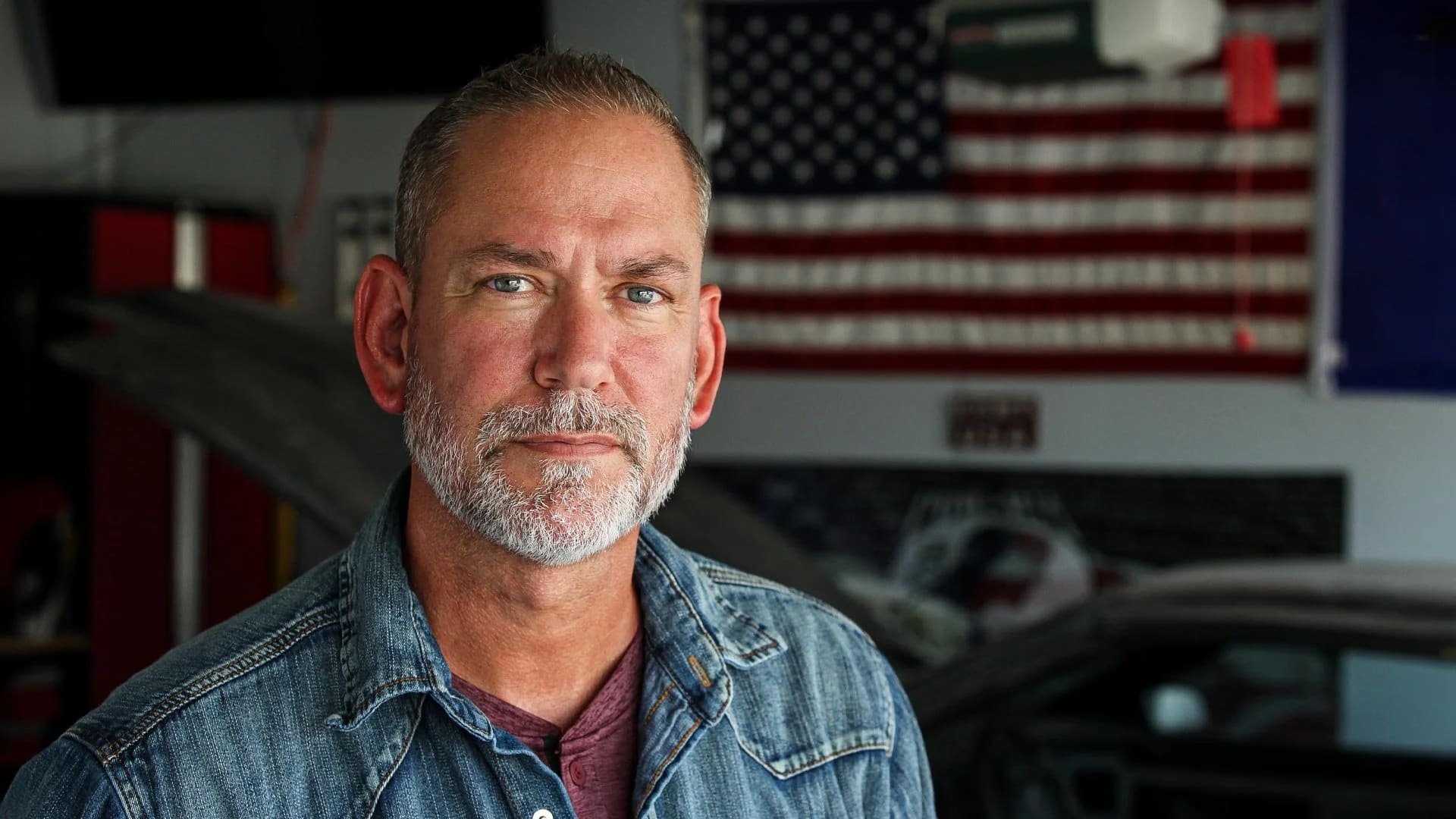
That candidate is Independent Dan Osborn, and he’s running in the ruby-red state of Nebraska.
Independents in the Senate
Osborn is a U.S. Navy veteran, industrial mechanic, and former labor union leader. He ran in 2024 as a long-shot against Deb Fischer, and has announced his candidacy this cycle against incumbent Pete Ricketts.
He will probably not win. Nebraska is a Republican stronghold red (R+18.3 in a neutral environment). No one covers statewide elections in Nebraska because Nebraska is not a state with competitive statewide elections. This is still a fascinating race.
Here are 9 reasons to think Osborn has a real chance.
Osborn performed shockingly well in the last election. He lost to incumbent Deb Fischer by the relatively thin margin of R+6.7. For context, Trump won the state by a whopping R+20.4.
The national environment has shifted by a similar margin. Trump won the popular vote by R+1.5 in 2024, but the current national environment favors Democrats (D+5.4). These are not quite numbers you can stack together,1 but there has been something like a 5-6 point swing against the GOP since Osborn’s last race.
The 2024 margin in Texas was close to the margin in Nebraska. Osborn lost by nearly the exact same amount as Allred in Texas (R+6.4) and significantly less than Powell in Florida (R+12.8). If Texas is competitive today, it stands to reason Nebraska could be as well.
Osborn has cash. He has already raised more than 2 million even at this remarkably early stage, 13 times what he had previously raised at this point in the election.
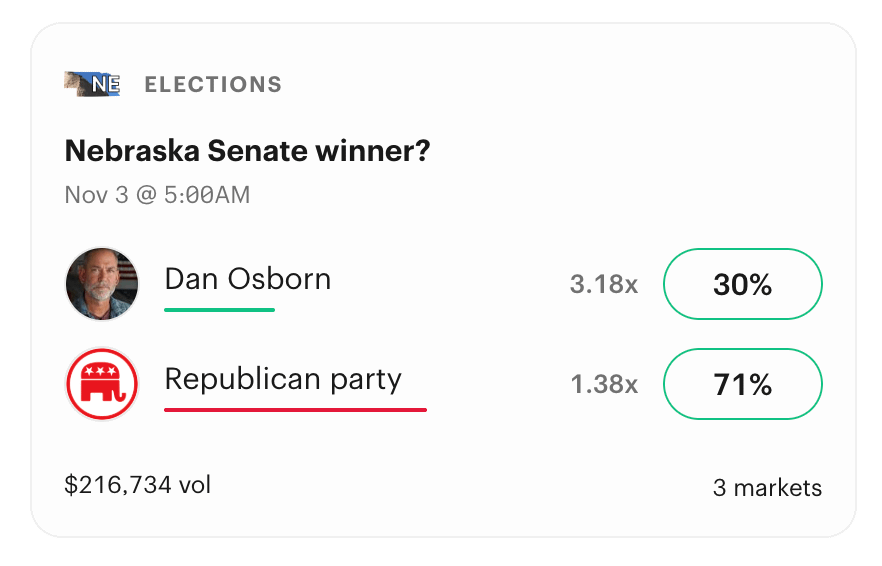
Prediction markets see a path for him. Osborn has a 30% chance of winning on Kalshi.2
This is not a presidential election. Trump’s name tends to draw a large number of voters who otherwise skip the ballot box. Midterms are lower-turnout than presidential elections, and Democrats usually benefit from this decreased turnout.
Democrats will not be fielding a candidate in Nebraska. The state party has decided not to field a candidate and is instead backing Osborn. The anti-Republican vote will not be split between a Democrat and an Independent.
Osborn appears to be a true independent. There is a small wave of ‘independents’ who are effectively Democrats trying to gain a leg-up by ditching the party label. I don’t think this is a bad idea per se, but I also don’t think voters will be convinced; several of these candidates had previously belonged to the Democratic party and even run as a Democrat. Osborn isn’t like this; he appears to be a true independent.
He has thus far not indicated which party he would support for Senate leadership.3
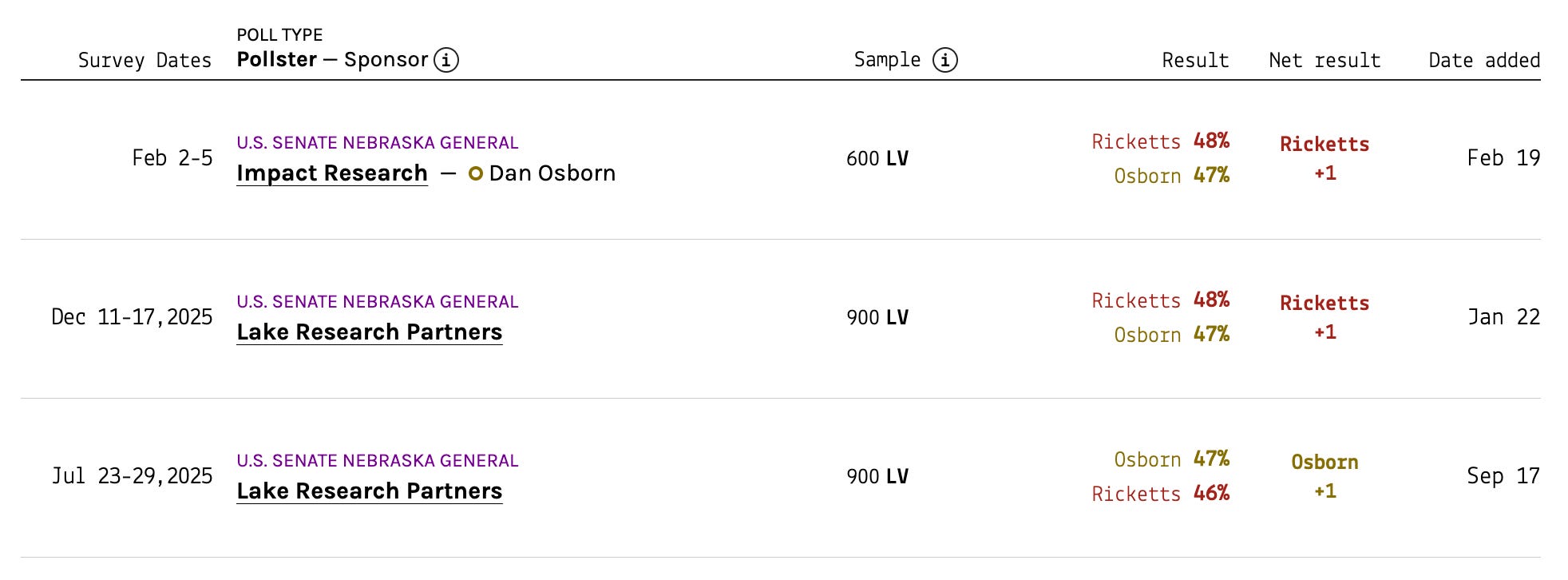
The limited polls we have are encouraging for him. There are not many head-to-head polls out yet in the Nebraska race. But we have a few:
And, to keep a lid on expectations, here are 6 reasons to think he doesn’t stand much of a chance at all.
Those polls are not reliable. Take a look at the dates, sample size, and partisan sponsor. The most recent one comes out of the Osborn campaign, and his campaign tended to release these strategically to boost fundraising efforts. Lake research is similarly a Democratic pollster (albeit a legitimate one not affiliated with the Osborn campaign).
Ricketts is a formidable incumbent. He is extremely wealthy, with a net worth exceeding $200 million, and Cook Political Report describes him as a popular former governor.
Ricketts also over-performed in the last election. Unusually, Nebraska had two senate races (due to Ben Sasse’s resignation). Pete Ricketts won this election by an R+25.2 margin, outperforming Trump.
There’s some weird drama in the primary. I don’t fully understand what’s going on here,4 but intra-party conflict might result in a spoiler “Democrat” on the ballot that could plausibly cost Osborn a few points.
Professional race raters are not convinced. Cook Political Report still rates this as a Safe Republican seat. Sabato’s Crystal Ball moved it from Safe to Likely, but noted that Ricketts is a strong candidate and an upset here remains unlikely.
Political gravity is powerful. Strongholds tend to be strongholds for a reason, and Nebraska is ruby-red territory. All these bullets should be considered against the backdrop of an R+20 state.
Finally, here are two reasons I’m keeping an eye on him regardless:
This may not be the end for Osborn. Jon Ossoff had a tendency to lose races in Georgia, until he began winning them. He is now in the conversation for president. Osborn could run in the next five statewide elections, keeping each one competitive; he only needs to get lucky once.
He could inspire more independent candidates. We are already seeing a handful of people following his model, excited by his 14-18 point over-performance.5 If Osborn can draw blood from a partisan stronghold—say, if he can shave the margin to R+2 or R+3—he will have already demonstrated something incredible: that an independent can turn a Safe seat into a toss-up.
The same national ballot average was D+0.3 the day before the election.
He is not listed on Polymarket, though you can infer his odds there are closer to 20%.
And it’s genuinely unclear which party he would support here. This is not a candidate who is a sure prospect to flip the Senate for Democrats; this is both a part of his appeal and a risk for Democratically-aligned backers.
My instinct is that it’s mostly noise.
Depending on whether you compare his margin of victory to that of Trump or Ricketts.